Small, predictable early childhood classroom routines can make the most challenging parts of the day feel easier.
Early childhood classroom routines don’t all require the same level of support. Some of the most challenging parts of the day happen at specific moments — particularly when children are being asked to stop, shift their attention or settle into something new.
In an early childhood classroom, some parts of the day naturally ask more of children than others. Moving away from an activity, bringing a group together, or settling after energetic play all require children to shift what they’re doing, where their attention is going and how their bodies are responding.
These are the moments where simple, predictable early childhood classroom routines can make a big difference.
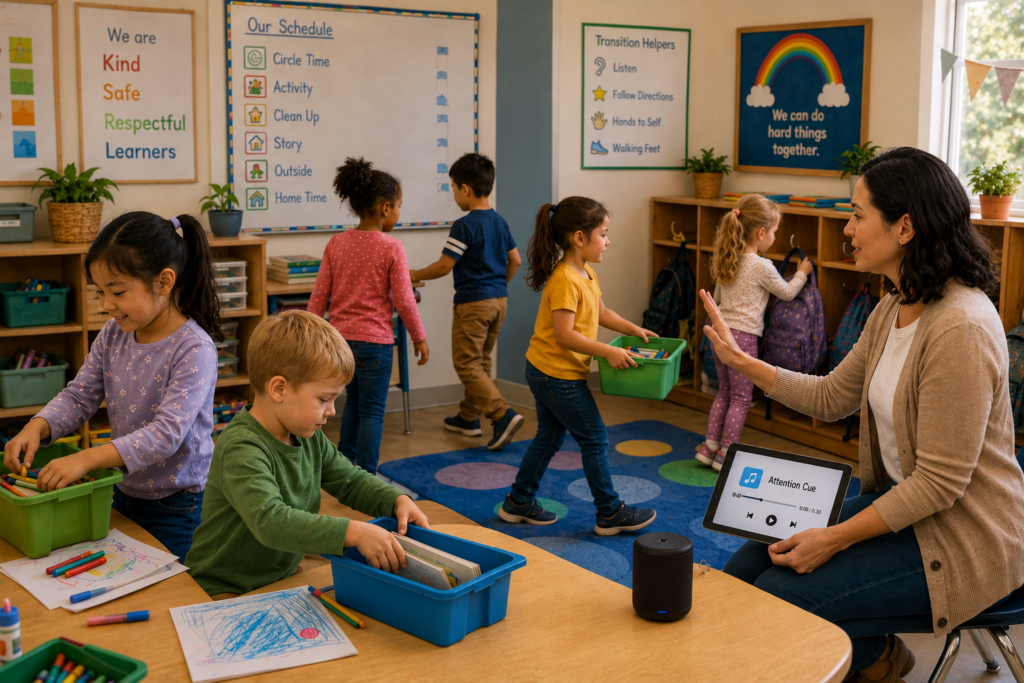
1. Transitions: When Children Need to Know What’s Next
Packing away. Moving to the mat. Washing hands. Getting ready to go outside.
Transitions ask children to stop one thing and prepare for something completely different.
And that’s often where the noise and movement increase.
One child is still playing. Another has already moved on. Someone isn’t sure where to go next. Meanwhile, the teacher may find themselves repeating instructions across the room.
A predictable cue can provide a clear signal that something is changing.
When children hear the same cue at the same point in the routine, they gradually begin to recognise:
“This means we’re about to do something different.” That predictability can make classroom transitions feel less abrupt and easier to follow.
2. Group Time: When Attention Needs Somewhere to Go
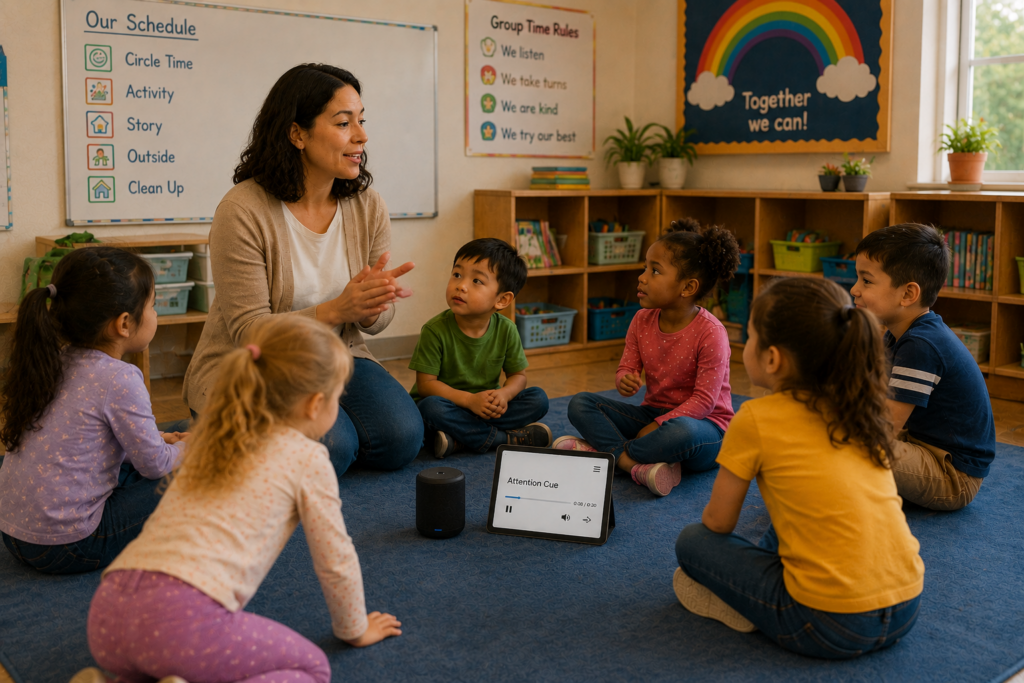
Getting children to the group area is only the beginning. Now you need to bring several different children’s attention towards one shared experience
Repeated calls of “Everyone listening?”, “Eyes this way” or “Come and sit down” can easily become part of the background noise.
A consistent listening cue gives children something familiar to recognise.
The aim isn’t to make every child instantly silent.
It’s to create a predictable signal that says:
“Something is starting. It’s time to listen.”
With repetition, the cue becomes part of the group-time routine rather than another new instruction children need to process.
3. Settling Moments: When Bodies Need Time to Slow Down
Children don’t necessarily move instantly from energetic play to quiet concentration.
After outdoor play, movement activities or an exciting group experience, their bodies may still be ready to move even though the classroom routine has changed.
This is where a predictable settling routine can help.
A familiar piece of music, slower movements and a consistent calm cue can signal:
“We’re slowing down now.”
The aim isn’t to force calm.
It’s to give children a familiar pathway from higher energy into a quieter part of the day.
Why Early Childhood Classroom Routines Need Predictable Cues
What do transitions, group time and settling moments have in common?
In each one, we’re asking children to make a shift.
From one activity to another.
From individual attention to shared attention.
From higher energy to lower energy.
Verbal instructions still have an important place in the classroom. But when they’re supported by simple, consistent cues, children have another way to recognise what is happening next.
When cues stay consistent, children have repeated opportunities to recognise the routine and respond with growing confidence.
Structure Doesn’t Mean More Instructions
Early childhood classroom routines don’t need more words, more rules or more reminders to become more predictable.
Sometimes it simply means making important moments more predictable.
When children begin to recognise the signals surrounding transitions, group time and settling, they can gradually learn what happens next.
Transitions can become smoother.
Shared attention can become easier to establish.
Settling can become a more familiar part of the routine.
And the teacher doesn’t always have to start the routine from scratch.
You’re no longer just reacting to the moment.
You’re guiding children through it.
Ready to Make These Moments More Predictable?
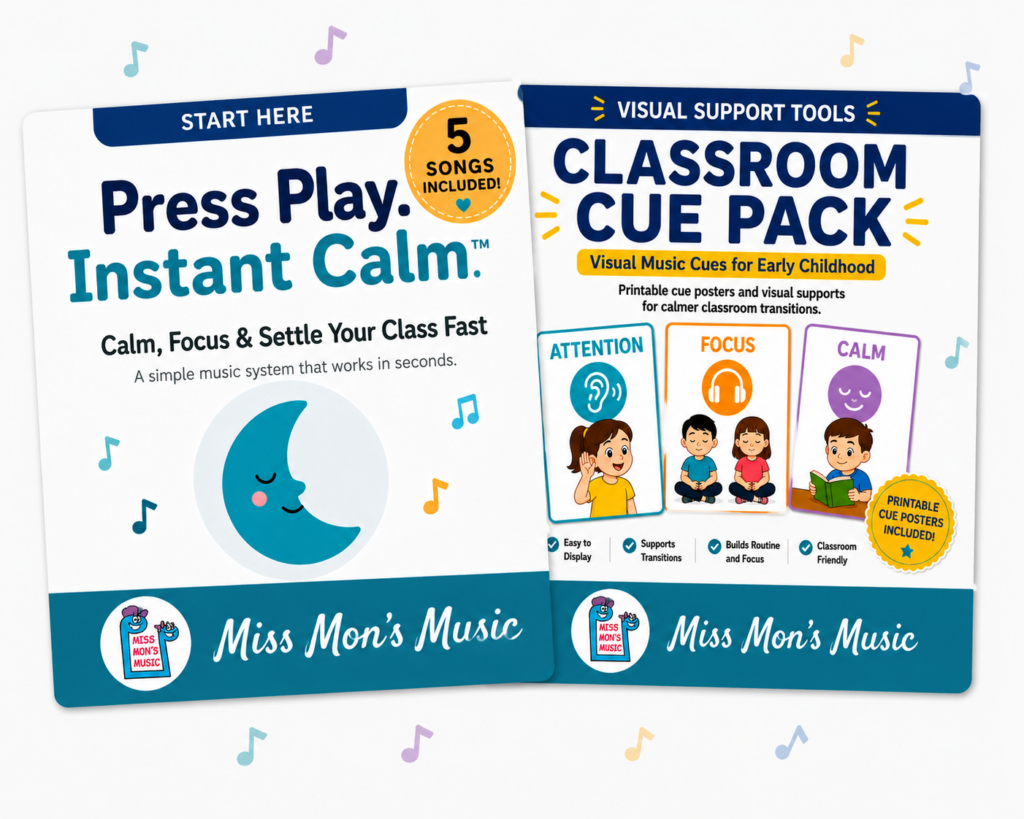
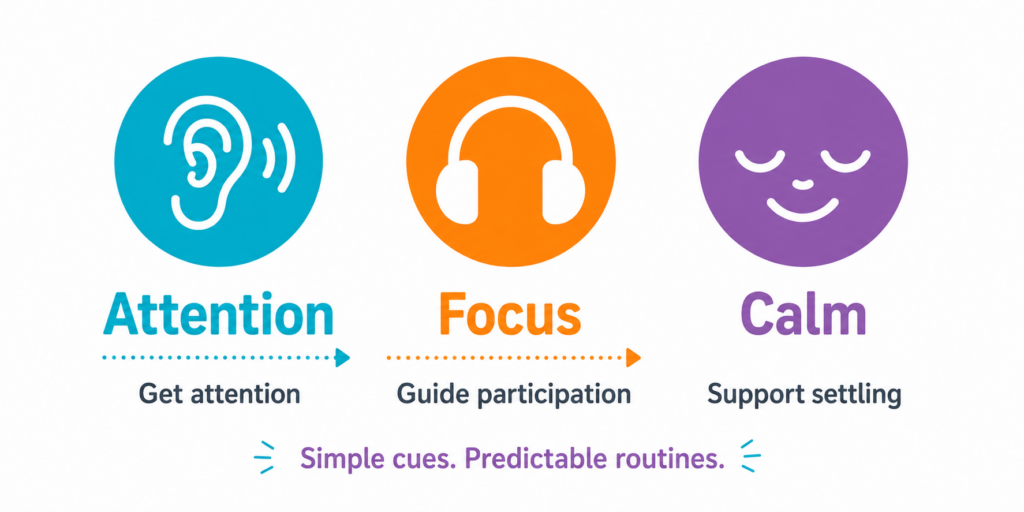
Press Play. Instant Calm™ uses simple, consistent music cues to support Attention → Focus → Calm during everyday early childhood classroom routines.
Use the cues consistently to help children recognise what happens next—without relying on repeated verbal instructions alone.