

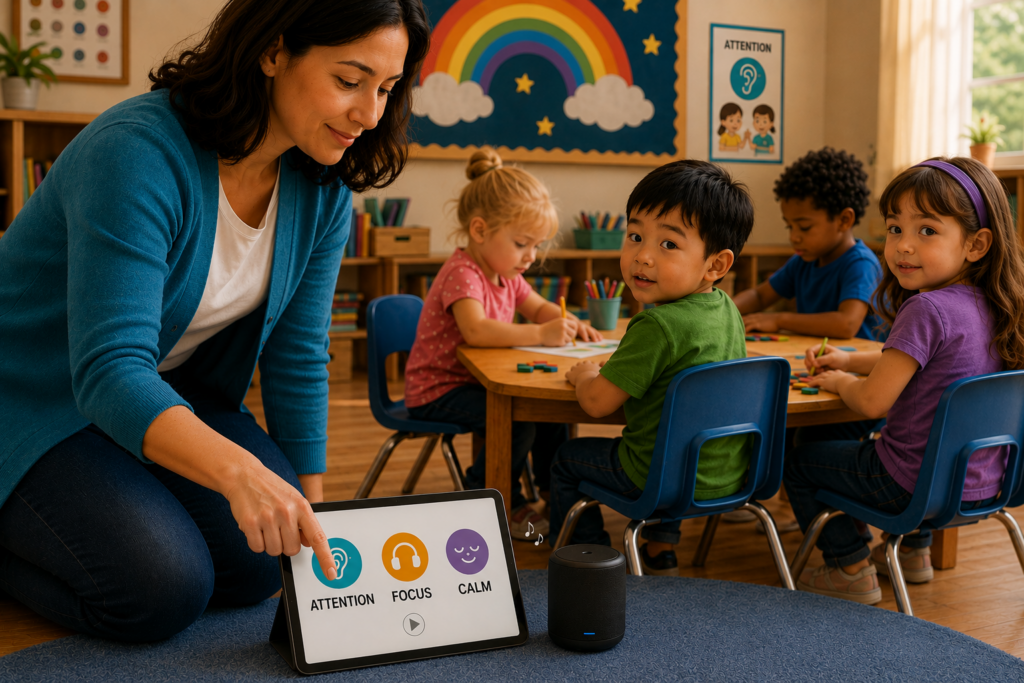
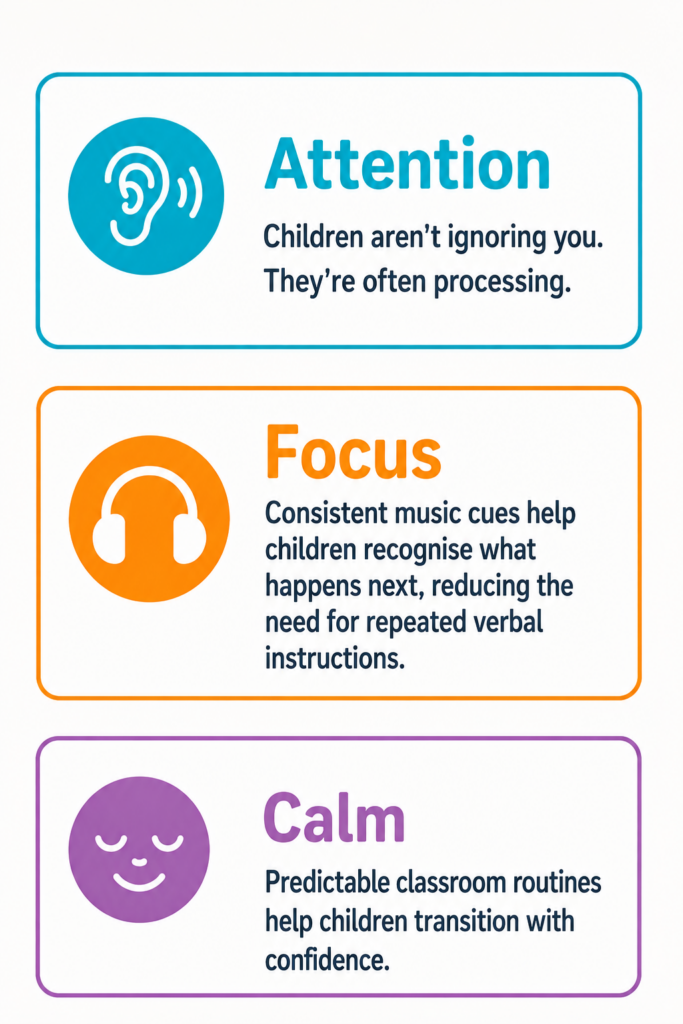
Children aren’t ignoring you. They’re processing.
Estimated reading time: 4 minutes
“Why do I have to repeat myself so many times?”
If you’ve ever asked yourself why children don’t listen straight away, you’re certainly not alone.
Almost every early childhood educator has experienced it.
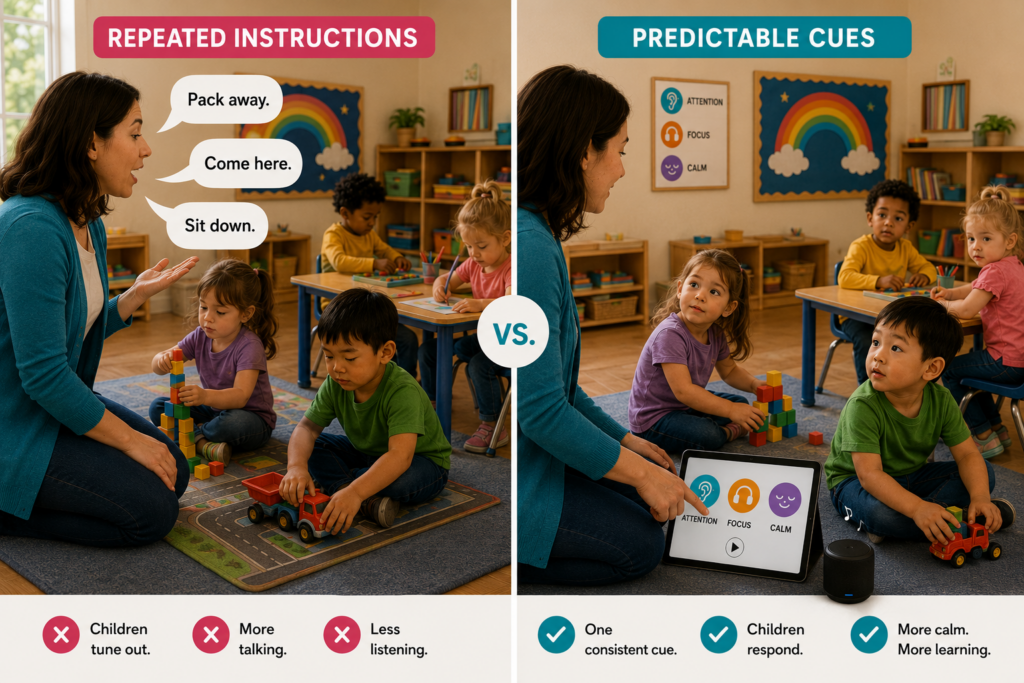
You ask children to pack away.
Some continue building.
You ask again.
A few look up.
You ask a third time.
Eventually everyone responds—but it feels exhausting.
It’s easy to assume children are choosing not to listen.
In reality, something very different is happening.
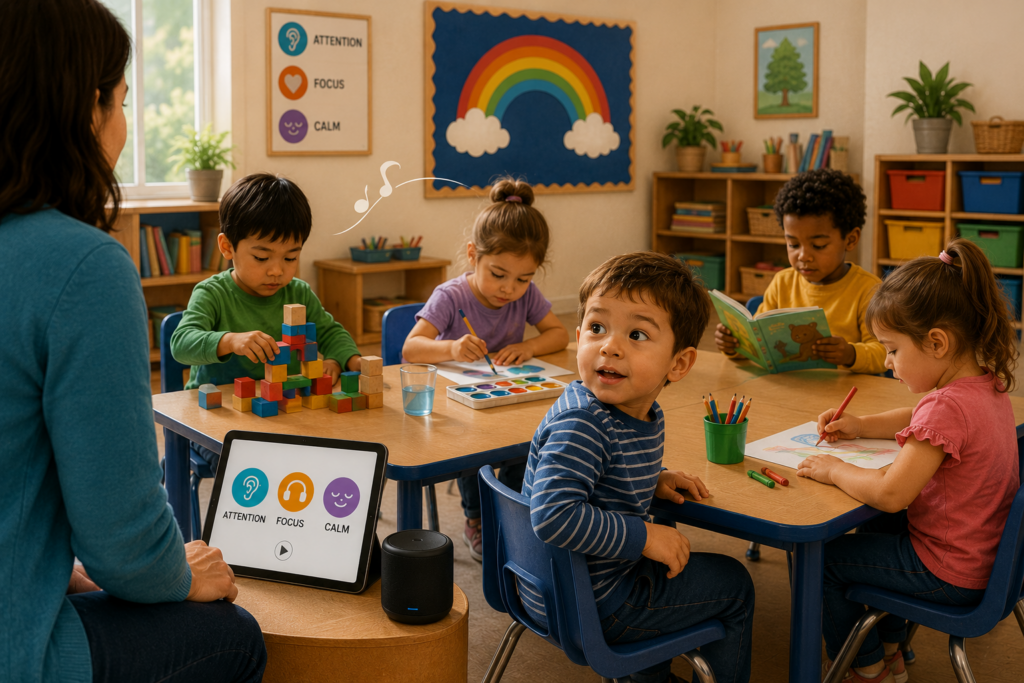
Young Children Are Still Processing
Listening isn’t simply about hearing words.
Young children are constantly processing what they’re doing, what their friends are doing, what’s happening around them and what comes next.
When we give several verbal instructions, children first need to:
- stop what they’re doing
- process the words
- understand what those words mean
- decide what action to take
Only then can they respond.
In a busy early childhood classroom, that’s a lot to process. Children don’t listen straight away.
It isn’t defiance.
It’s development.
Why Predictable Music Cues Work
Young children thrive on routine.
When the same music cue is consistently paired with the same classroom action, children begin recognising what happens next.
They no longer need to interpret a new instruction every time.
Instead, the cue becomes familiar. This strategy deals with he fact that children don’t listen straight away.
Over time, children begin responding automatically because they know exactly what the sound means.
That’s why predictable classroom routines become easier each day.
Children don’t need more reminders. They need more consistency.
From Telling to Guiding
Because children don’t listen straight away, many teachers find themselves repeating the same instructions throughout the day:
“Everyone sit down.”
“Eyes this way.”
“Come on everyone.”
“Listen!”
Repeated verbal instructions can become tiring for both teachers and children.
Children hear the words, but they still need time to stop, process and decide what to do next.
Predictable Cues Reduce the Thinking
Instead of asking children to interpret a new instruction every time, consistent music cues gently signal what comes next.
A familiar cue becomes part of the classroom routine.
Children begin recognising the sound before they even think about the words.
Over time, they don’t need repeated reminders because they already know what the cue means.
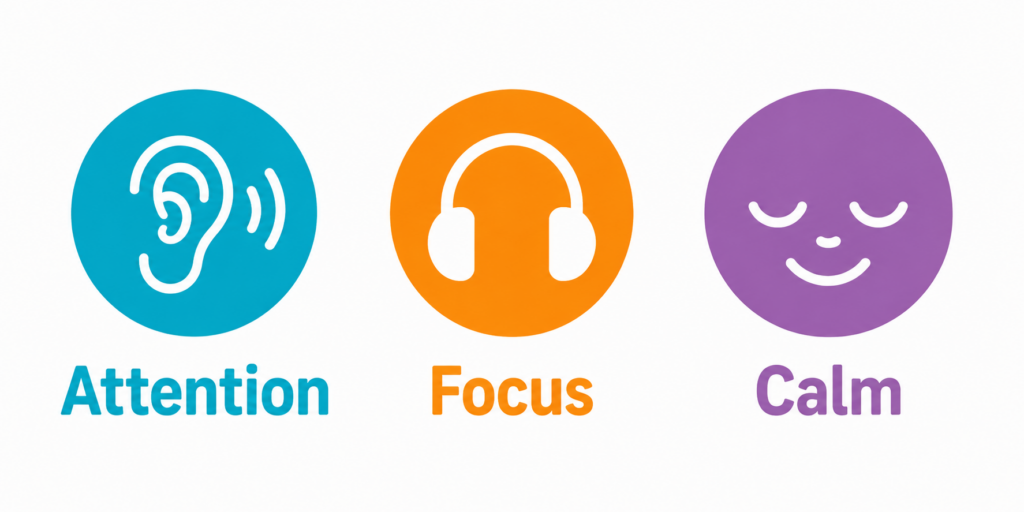
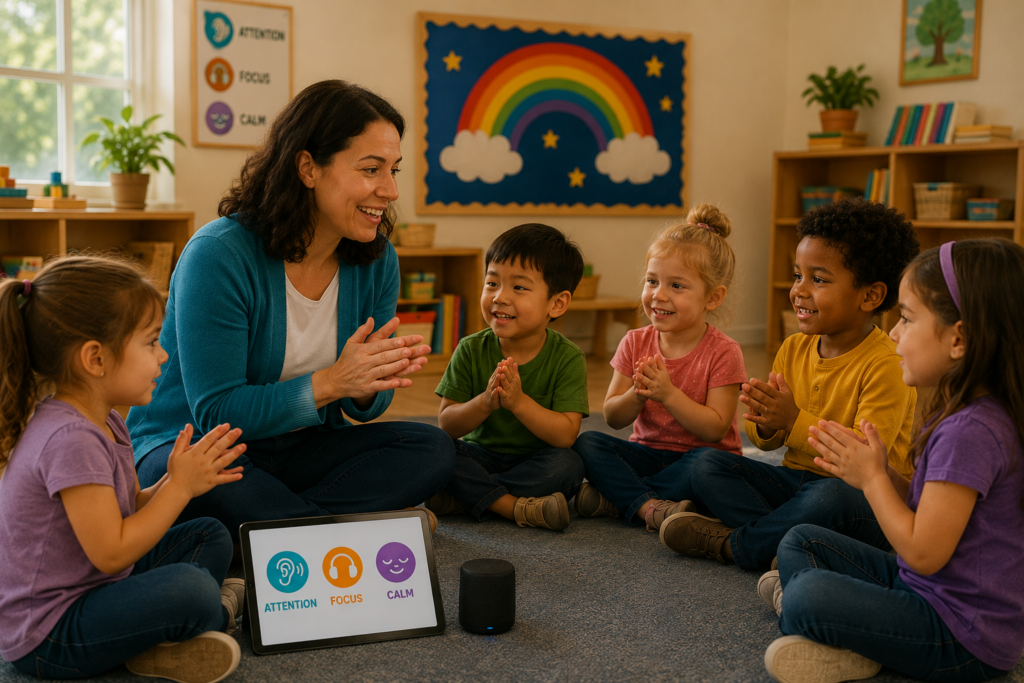
One cue says:
🩵 It’s time to listen.
Another says:
🧡 It’s time to join in.
Another gently signals:
💜 It’s time to settle.
The cue doesn’t replace the teacher.
It supports the teacher by making classroom routines more predictable.
Small Changes Create Lasting Habits
Children don’t listen straight away. Children don’t learn routines overnight.
They learn them through consistency.
Every time the same cue is used, children strengthen the connection between the sound and the classroom routine.
Eventually those responses become automatic.
That’s the difference between repeatedly telling children what to do and gently guiding them through predictable classroom routines.
Small daily habits create calmer classrooms.
Predictable classroom music cues help children respond with confidence during everyday transitions, group time and learning activities.
Children don’t listen straight away – Key Takeaways
Discover Press Play. Instant Calm™
Ready to Stop Repeating Yourself?
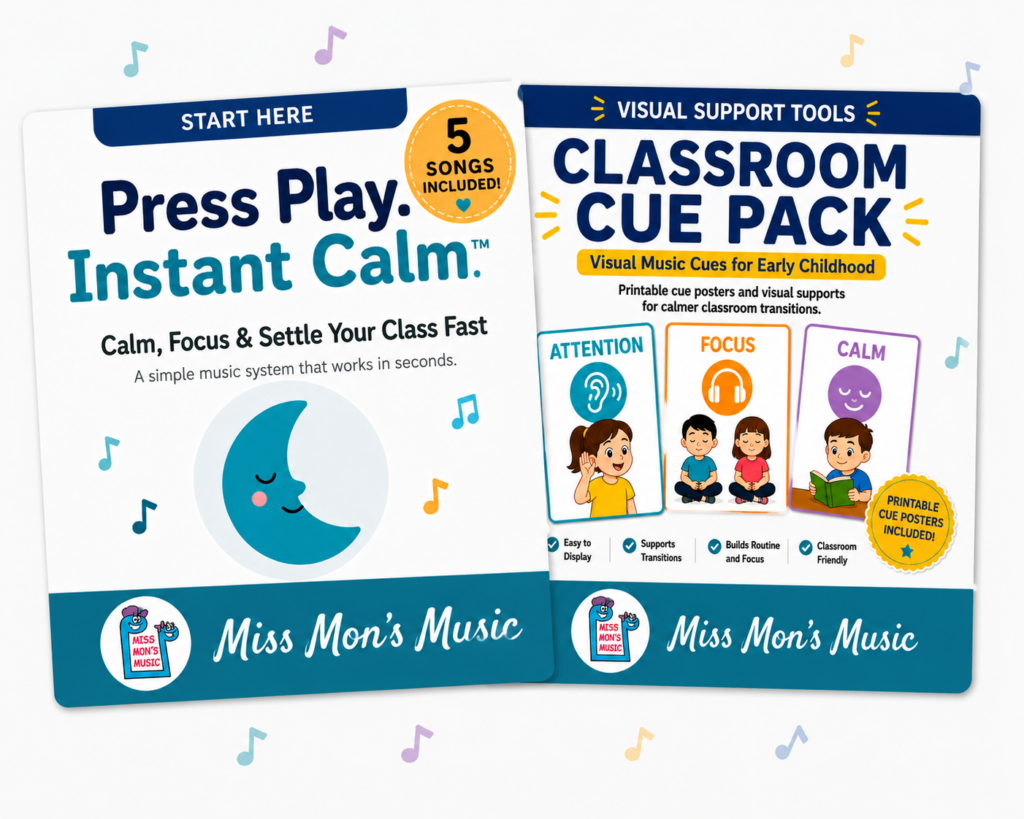
Children don’t listen straight away because they’re often still processing. Press Play. Instant Calm™ uses simple, predictable music cues to help children move from Attention → Focus → Calm, making classroom transitions smoother and reducing the need for repeated verbal instructions.
Author
Miss Mon’s Music
Helping early childhood educators create calmer, more connected classrooms through simple music cue systems.
Related Posts